


 NL
NL
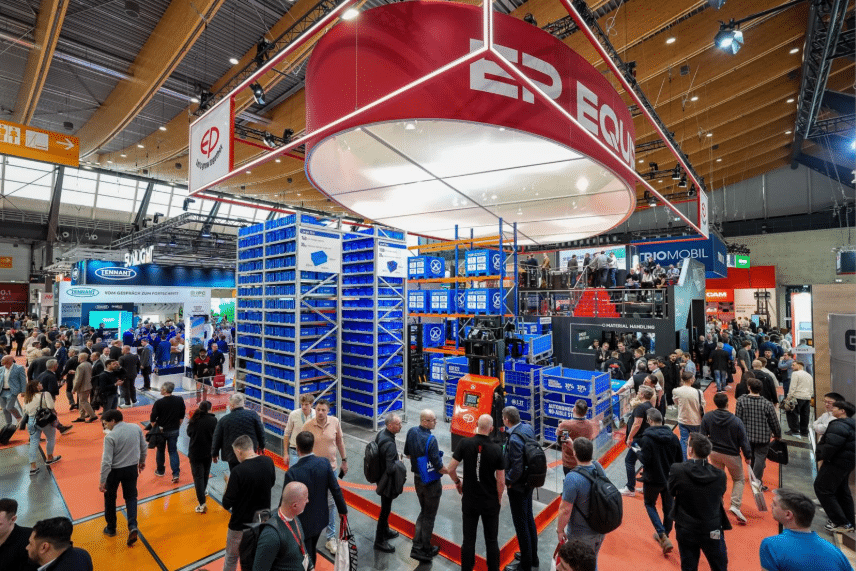
Anyone who walked into a warehouse a few years ago would have seen much of the same: robust equipment, hardworking operators and processes designed to keep goods moving efficiently. However, anyone who recently visited the exhibition halls at LogiMAT in Stuttgart could sense that something fundamental has changed.
The focus is shifting. It is no longer simply about the most powerful forklift or the highest lift height.
At Prins Maasdijk and Van Geel Tilburg, we closely monitor these developments. Not because we are interested in every new gadget, but because we aim to help businesses translate ambition into practical solutions on the warehouse floor. We believe in progress that strengthens your operation, growth that remains manageable, and innovation that enables the next step forward while keeping your business moving.
We have compared our observations from the exhibition floor with the latest LogiMAT 2026 trend reports, research from the Karlsruhe Institute of Technology (KIT), and other leading industry studies. The result is a clear overview of the trends that are shaping the future of intralogistics and what they could mean for your operation.
1. Automation Is Becoming More Accessible – and More Powerful
For many years, automation was seen as something reserved for large organisations with substantial budgets and vast distribution centres. However, recent research from KIT shows that the barriers to adopting mobile robotics, including AGVs and AMRs, have fallen significantly.
For SMEs, this means there is no longer a need to redesign an entire warehouse before taking the first step. One of the defining trends of 2026 is accessible automation. Imagine a simple autonomous vehicle transporting pallets from A to B throughout the day — a repetitive but essential task that often ties up valuable operators.
The real advantage is that while entry-level automation has become far more accessible, the opportunities for expansion are greater than ever. For organisations ready to take the next step, we saw systems mature enough to optimise routes autonomously during peak periods and adapt dynamically to changing conditions.
The result is a coordinated fleet that works seamlessly together, maximising throughput and efficiency without requiring a dedicated team of IT specialists.
2. The Rise of Predictive Safety
Workplace safety is always priority number one, but the way we approach safety is fundamentally changing. Where we used to rely on mirrors, horns and sensors that only beeped when a near collision occurred, we now talk about predictive safety.
Thanks to advanced vision technology and smart algorithms, modern machines now literally look ahead. Not only do they monitor whether something is behind the truck, but they also analyze the speed and course of an oncoming colleague. The system recognizes risks before they arise and intervenes proactively by adjusting speed or warning the driver.
This is not a luxury, but a necessity. In a busy environment where man and machine increasingly work side-by-side, predictive safety brings peace of mind to the workplace. It protects your people, prevents accidents and, not unimportantly, limits unnecessary damage and resulting downtime.
3. People as the centerpiece in a tight labor market
We don’t have to tell you that good drivers and warehouse workers are hard to find. The 2026 LogiMAT trend reports therefore emphasize a crucial point: technology is not there to replace humans, but to make the workplace more attractive.
Ergonomics is the magic word here. We saw at the show a huge focus on intuitive controls similar to the interface of a smartphone. No more complicated levers, but natural controls that minimize physical strain. A driver who gets out of his cab at the end of the day less tired is fitter, more alert and more loyal to your company. In a tight labor market, investing in a healthy and modern workplace may be the smartest investment you can make.
4. Circular intralogistics: green with efficiency
Sustainability was once a marketing term, but in 2026 it has become concrete and measurable. We see this reflected in what we call “circular intralogistics. This goes beyond just an electric motor; it’s about the entire life cycle of your equipment.
Two developments stand out here:
1. More sustainable materials: Low-carbon steel is increasingly being used. Since the frame and mast are the largest part of a machine, this directly lowers your fleet’s carbon footprint without sacrificing the robustness you need for heavy-duty work.
2. More efficient powertrains: New generations of powertrain systems use energy much smarter. In practice, we see significant savings in energy consumption. Not only is that good for your sustainability reporting, but it translates directly into lower operating costs and longer uptime per battery charge.
Conclusion: What does this mean for you?
The common thread at the LogiMAT 2026 was clear: The time for waiting is over, but you also don’t have to immediately pay the top price for complex systems. The future of the shop floor is smart, down-to-earth and people-oriented.
Whether you are taking your first step with a mobile robot, want to make your fleet more sustainable or take safety to the next level; it starts with making the right choices for your specific situation. We like to translate these global trends to the daily reality of your shop floor. Together, we make sure that your logistics process not only runs smoothly today, but is also ready for the challenges of tomorrow.
Want to learn more about how these trends fit your business? Feel free to contact us for some down-to-earth, customized advice. Did you find this interesting? Sign up for our LinkedIn newsletter